Ai Combine Harvesters
Not all social media is bad. There are some incredibly useful channels to subscribe to, but look around you in any social setting: the dopamine junkies are everywhere. Train stations, restaurants, concerts, classrooms, bedrooms. Screens glow in the hands of both children and adults, drip-feeding the belief that we all need to keep recording, posting, scrolling and adults shop online for more, more, more.
Insidiously, these devices are hollowing out attention, patience, and depth of thought. A growing body of research now points in the same direction: sustained exposure to this kind of digital stimulation is lowering concentration and cognitive development. Teachers aren’t imagining what they see before them—children struggling to focus for more than twenty minutes, toddlers showing signs of dependency on screen-based stimulation. It’s real. ‘Shorts’ compound this attention-destroying problem. This isn’t harmless entertainment; it’s neurological conditioning. And some of the brightest minds of the future are paying the price.
Every day, every platform is flooded with vast quantities of rapidly consumed, rapidly disposable content. A mildly opinionated post is enough to trigger hundreds or thousands of comments, followed by comments about the comments, arguments branching endlessly into chaos, not engagement. Some of the dominant creators see the highest financial rewards for quantity, not quality. It is shockingly ironic that the most successful content is contentless. It mirrors the term social media itself—there is little that is genuinely social about it. It is mere performance.
Scroll through YouTube or TikTok and you’ll see grown men behaving like over-excited boys, leaping around and repeating cringeworthy slang—“bro, bro, bro, that’s sick bro, you get me bro”—all noise, devoid of substance. Worse, it’s being normalised. Young viewers absorb this behaviour and mistake it for adulthood, for personality, for success. They also absorb the far more damaging idea that spending hours watching this spectacle is normal. It is not. It’s time theft on an industrial scale.
The real tragedy is that genuine talent gets lost in this high-volume noise. Thousands of artists, musicians, and writers lose to the algorithms. Rock bands play gigs for free, make their music for free, upload it to platforms, only to receive a pittance for 100,000 downloads. An artist could spend twenty years mastering and emulating Caravaggio’s use of light and darkness, only for it to be visually consumed and instantly forgotten in the digital world. It gets worse. Artwork is often taken and absorbed into someone else’s social media page to bolster their own following—the artist reduced to a simple acknowledgement and a hashtag. Commercial usage rights are now almost impossible to police.
If you’re a creator, what’s the answer? Withdrawing may be your only form of rebellion but do you then isolate yourself? This is not the intention of tech platforms but they know if you decide to bow out, it will almost certainly be the result. The tech giants have engineered dependence, and participation often feels mandatory.
Should you be ruthless about where and why you promote your work. Ask yourself honestly: do you really want to give the finest examples of your craft away for free, to an audience trained not to appreciate it? Do you want your life’s work reduced to a fleeting dopamine trigger between adverts and nonsense? My advice: step away from it. Let social media collapse into an AI-generated swamp if that’s where it’s heading.
Which brings us to AI. It has already taken a wrecking ball to parts of the creative industries. Graphic design jobs are vanishing. AI is faster, cheaper, and “good enough” for clients who no longer care about originality. The tools are now in the hands of people who have invested nothing in learning a craft. AI is excellent for compiling bullet-point notes for meetings or drafting marketing taglines, but these systems also convincingly replicate oil paintings in any style, generate mind-blowing guitar solos, and produce images good enough for fashion editorials. The line between human creation and machine output is no longer blurred—it’s being erased.
The tech giants seem perfectly comfortable investing in systems that steadily remove human thinking, making, and creative struggle from the equation. But those are precisely the things that nourish the human soul. Making, thinking, doing—these are not inefficiencies to be optimised away. They are the source of purpose.
So here’s my conclusion: don’t spend years creating something meaningful just to throw it into a digital void for validation. And here’s the truly radical option: be brave enough to step away from the digital system entirely—just pack up and go. The digital noise falls away, silence returns and stillness is restored. Privacy is a formidable and forgotten asset.
If you grow in a field not managed for mass harvesting, the AI combine harvesters can’t consume your hard work and let’s make no mistake, they’re coming!
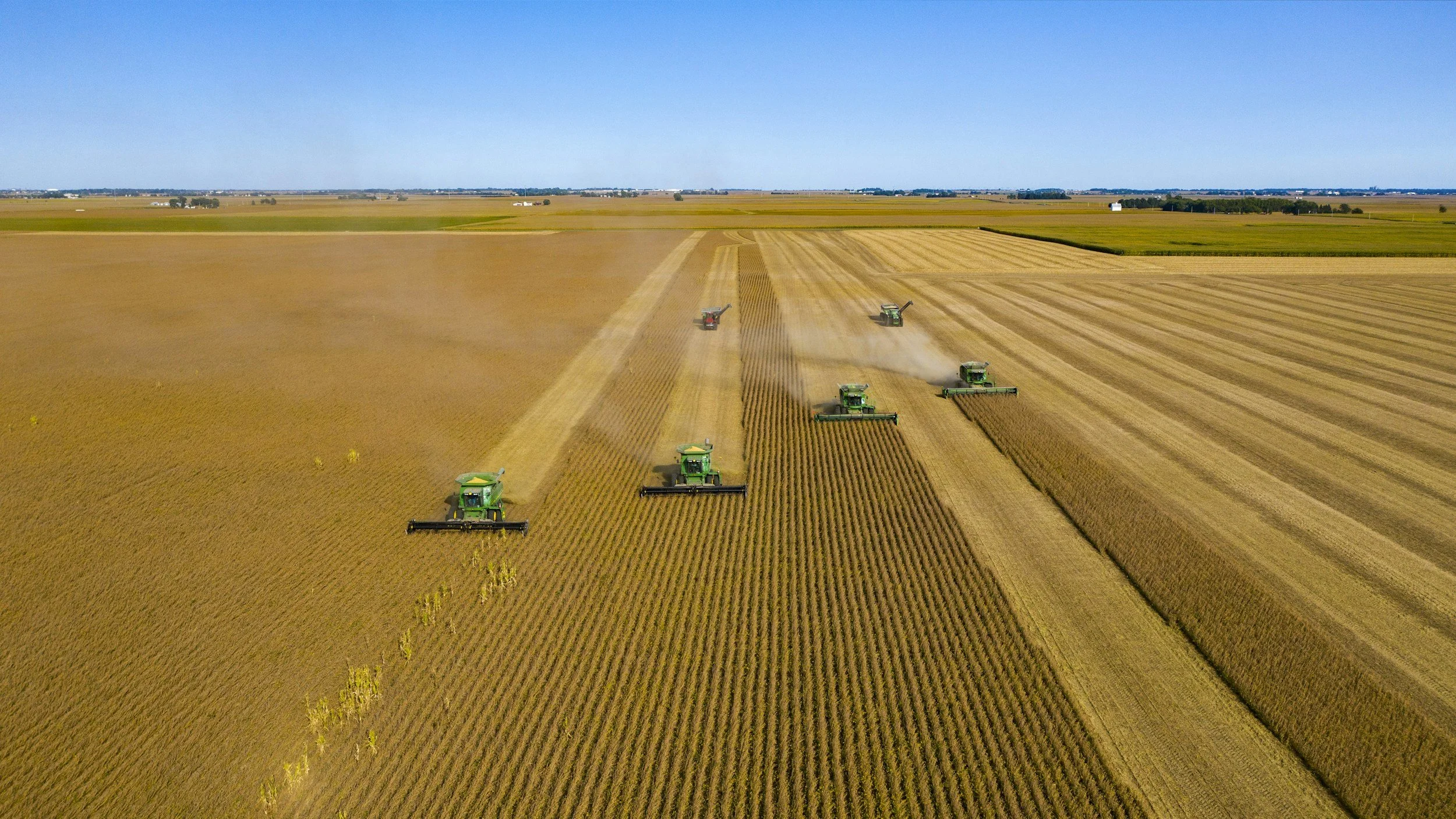
The Ai harvesters are coming.
